
You drove for hours, pitched camp, hiked until your legs ached, and finally crawled into your sleeping bag. Then at 5 a.m. the sun turns your tent into a glowing lantern and your sleep is over. A campsite has no curtains, so early light gets in no matter how tired you are.
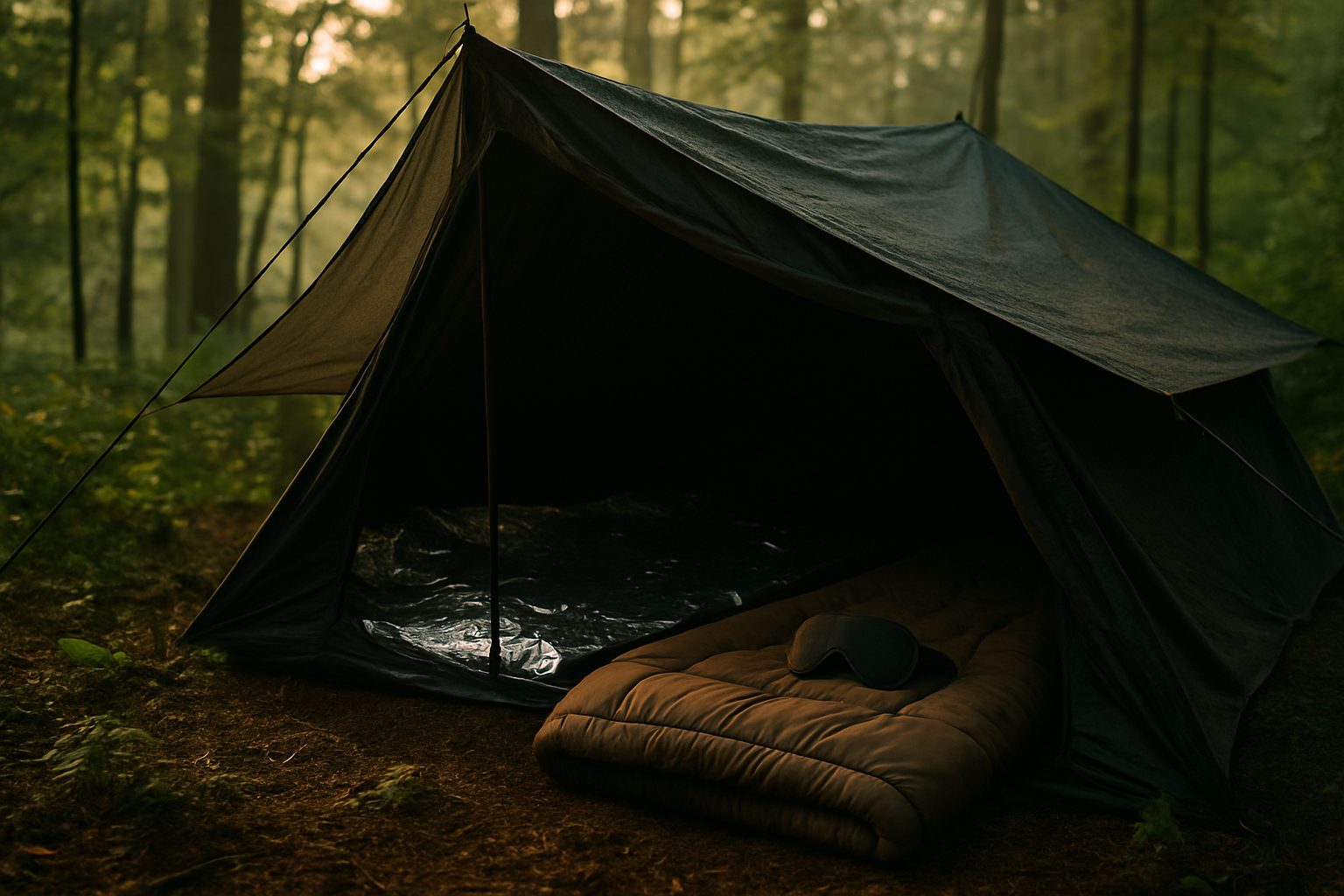
The good news is that you do not need an expensive specialty tent to fix this. With a tarp, some dark fabric, a sleep mask, or a smarter pitch, you can block most of the morning glare and still keep air moving. Below are 8 simple, field-tested ways to black out your tent so you actually get the rest a camping trip is supposed to give you.
1. Use Drapes
Draping is a near fail-proof way to shield your tent from heat and sun. Use a tarp as a drape over the outside of the tent. You can cover just the roof or the whole tent area. Covering only the roof will not block the light entirely, but it keeps ventilation strong. Covering the whole tent blocks far more light, but you trade some airflow and trap warmer air inside.
Keep a little distance from the top and hang the tarp from a height. Campers usually rig theirs from a nearby tree. Pay attention to the direction of the sunrise, because draping toward the right side gives you both sun-blockage and ventilation at once.
Hang the tarp with a gap above the tent for airflow.
Angle the cover toward the sunrise side.
A roof-only cover keeps things cooler; a full cover blocks more light.
2. Black Out Liner
A dark fabric works well to hide your tent walls from sunlight. Clip the fabric along the inside of the tent walls or sew it in place. The idea is similar to draping, except the barrier sits inside the tent instead of over it. Keep the vents open so enough air can still flow through and you do not wake up stuffy.
3. Cover the Bed Pod
If you do not have enough fabric for a full blackout liner, or you forgot to pack a tarp, you can still cover just the sleeping area. Treat it like hanging curtains over a window and screen off the bed pod alone. This saves your sleep without much gear and helps keep the tent interior cooler. Pick a fabric that is dark in color for the best light blocking.
4. Use Reflective Blankets
Another smart way to keep brightness off your face is to keep reflective blankets handy. Regular campers rarely leave home without one. The silver, shiny surface reflects both light and heat away from the tent very effectively.
These blankets are also waterproof and tear-resistant, so in surprise rain or snow they protect both the inside and outside of your tent. They pack down small and pull double duty as emergency gear, which makes them an easy item to keep in your kit.
5. Use a Sleep Mask
If covering the whole tent feels like too much hassle, a sleep mask is the simpler, more cost-effective fix. A blackout sleeping mask keeps the sun's glare off your eyes without covering the tent at all, so you never sacrifice ventilation. It is also the only fair option when you share a tent with someone who actually wants to wake up to the bright morning sun. They get their sunrise, you keep sleeping.
6. Choose the Right Spot
One of the oldest camping rules is to travel light, both in pack weight and in how much gear you have to manage. Instead of hauling extra fabric, let your surroundings do the shading for you. Look for a spot with plenty of natural cover, such as trees and overhanging branches, that will keep early sun off the tent. It also helps to pitch away from other campers using artificial light, so you can enjoy a dark, star-rich night sky.
Pitch under trees or branches that block the eastern sun.
Check where the sun will rise before you stake down.
Camp away from other parties' lanterns and headlamps.
7. Choose the Dark-Colored Tent
A simple way to cut down the sun glaze is to buy a tent in a darker shade. Darker fabric keeps more light out, but there is a trade-off: a dark tent can run warmer than usual because darker colors absorb light faster and heat the interior.
If you would rather not deal with that heat, you have two options. Cover a brighter tent with a darkened tarp, or look for a tent built with internal padding or a blackout bedroom that blocks light without baking you.
8. Dark Room Trick
Last but not least, you can buy a tent with built-in features that block light without choking off ventilation. This is usually called dark-room or blackout technology, and it works a little differently between manufacturers. Some use reflective layers around the outer rim of the tent, while others rely on insertable panels. Both block out a lot of light with very little fuss on your part. There are even gazebos and larger shelters with dark-room treatment in specific zones, such as the sleeping area.
Gear That Helps
CampingKnow is reader-supported. When you buy through links on our site, we may earn an affiliate commission at no extra cost to you. Learn more.
- Rain Fly Tarp Oversized with Tent Pole
An oversized, well-reviewed camping tarp that makes draping easy, so you can shade the roof or the whole tent and dial in the airflow you want.
- Arcturus Heavy Duty Survival Blanket
A heavy-duty reflective blanket that bounces light and heat away from the tent, and it is waterproof and tear-resistant for emergency rain or snow too.
- Unimi New Sleep Mask
A low-hassle blackout mask shaped for side sleepers and breathable enough that your eyes will not sweat, ideal when you do not want to cover the tent.
- Coleman Camping Tent with Blackout Bedroom Technology
A tent with built-in blackout bedroom technology that blocks morning light at the source while keeping ventilation intact, so you skip the DIY rigging.